
If you’re considering upgrading your driving licence, one of the most common questions is what vehicles require a C1 licence? In the UK, a C1 licence allows drivers to operate vehicles weighing between 3,500kg and 7,500kg, which includes many medium-sized commercial vehicles used across logistics, healthcare, removals and specialist transport.
These vehicles are larger than standard vans but smaller than full HGVs. Because of their increased weight and size, drivers must have the correct licence category to operate them legally.
In this guide, we’ll explain which vehicles require a C1 licence, why this licence category exists, and how you can begin C1 licence training if you need to upgrade.
What Is a C1 Licence?
A C1 licence allows you to drive vehicles with a maximum authorised mass (MAM) of up to 7.5 tonnes with a trailer up to 750kg. This category bridges the gap between a standard car licence and a full HGV licence.
Many industries rely on vehicles in this weight class because they provide more carrying capacity than vans while remaining easier to manoeuvre than large articulated lorries.
If you want to work in transport sectors using these vehicles, completing C1 licence training is usually the first step.
7.5 Tonne Delivery Trucks
One of the most common vehicles requiring a C1 licence is the 7.5 tonne delivery truck. These vehicles are widely used by supermarkets, logistics companies, furniture retailers and parcel distribution businesses.
Because they offer significantly more cargo capacity than a van, they are ideal for regional deliveries and urban logistics routes.
Drivers operating these vehicles professionally often combine their licence with Driver CPC training, which is required for most commercial driving roles.
Ambulances and Emergency Response Vehicles
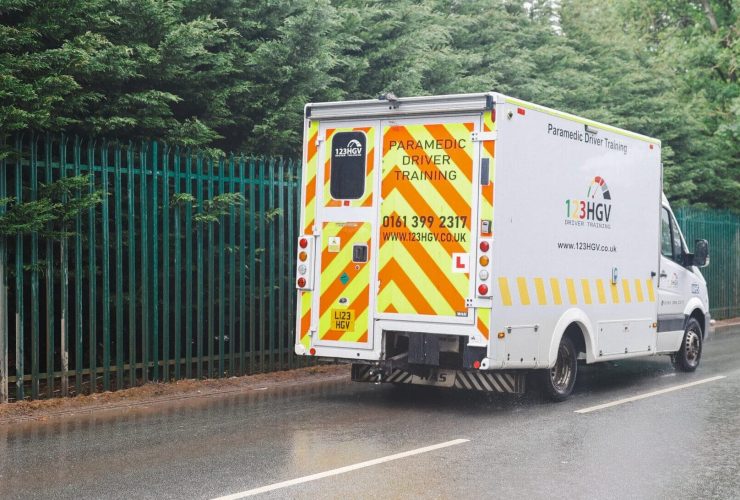
Ambulances are another vehicle type that typically falls within the C1 weight category. Because of the medical equipment carried inside, most ambulances exceed the standard 3.5 tonne vehicle limit.
This means ambulance drivers must usually hold a valid C1 licence before they can operate emergency medical vehicles.
If you’re planning to work in this sector, you can explore training options such as C1 licence training in Manchester, C1 licence training in Birmingham or C1 licence training in Leeds.
Horseboxes
Horse transport vehicles are another common example of vehicles requiring a C1 licence. Many horseboxes used by equestrian riders and professional trainers weigh between 3.5 tonnes and 7.5 tonnes once fully loaded.
Because of this, drivers transporting horses to competitions, training centres or events must ensure they hold the correct licence entitlement.
Many horse owners choose to obtain a C1 licence so they can legally transport animals without needing to rely on specialist drivers.
Large Motorhomes and Campervans
Many luxury motorhomes and large campervans exceed the standard car licence weight limit of 3.5 tonnes. Some high-end motorhomes can weigh well over 4 tonnes once fully equipped with living facilities and storage.
To legally drive these vehicles, drivers usually need a C1 licence unless they passed their driving test before 1997 and still hold automatic C1 entitlement.
This is particularly relevant for people planning long-distance travel or purchasing large motorhomes for touring across the UK and Europe.
Removal and Furniture Transport Vehicles
Removal companies often use 7.5 tonne trucks to transport furniture and household goods. These vehicles provide enough space for larger loads while remaining suitable for residential streets and urban environments.
Drivers working in the removals industry frequently hold C1 licences so they can operate these vehicles legally.
Community Transport Vehicles
Many community transport organisations use medium-sized vehicles that fall into the C1 weight category. These vehicles are used to transport passengers who require mobility support or access to healthcare, social services or local community programmes.
Drivers working with these organisations must ensure they have the appropriate licence entitlement before operating these vehicles.
Who Typically Needs a C1 Licence?
Drivers across several industries commonly require C1 licences. This includes:
- Ambulance and paramedic drivers
- 7.5 tonne delivery drivers
- Removal and logistics drivers
- Horse transport operators
- Motorhome drivers
- Community transport drivers
Many drivers obtain a C1 licence because it expands their job opportunities and allows them to operate larger vehicles safely and legally.
How to Get a C1 Licence in the UK
Obtaining a C1 licence typically involves several steps. These include:
- Applying for provisional C1 entitlement
- Completing a driver medical
- Passing the LGV theory test
- Undertaking practical driver training
- Passing the DVSA practical driving test
Once qualified, drivers can legally operate vehicles up to 7.5 tonnes across a wide range of industries.
If you’re ready to begin training, you can explore courses such as C1 training in Bristol, C1 training in Cardiff or C1 training in Nottingham.
Final Thoughts
A wide range of vehicles require a C1 licence in the UK, particularly those weighing between 3.5 tonnes and 7.5 tonnes. From ambulances and delivery trucks to horseboxes and motorhomes, this licence category plays an important role in many industries.
If you are planning a career in transport, logistics or emergency services, gaining your C1 licence can open up valuable employment opportunities.
To learn more about the qualification process, read our guide on what a C1 licence is or explore our C1 training courses available across the UK.