
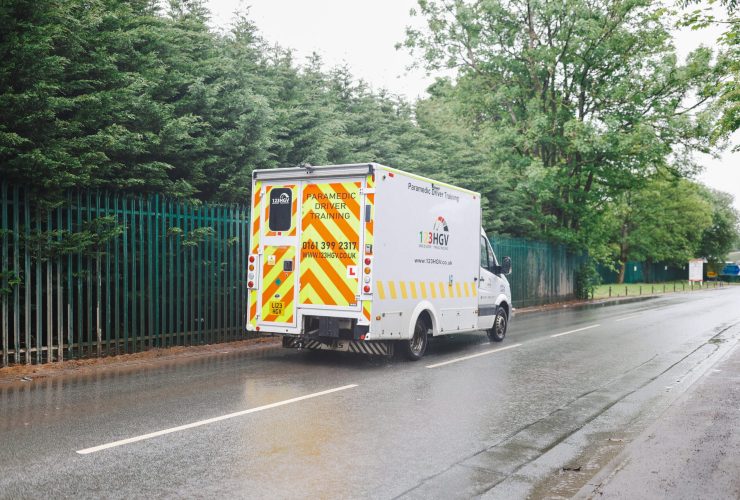
A C1 licence allows drivers in the UK to operate vehicles weighing between 3,500kg and 7,500kg. These vehicles sit between standard cars and full HGV lorries, making the C1 licence essential for roles such as ambulance driving, 7.5 tonne delivery driving, community transport, and specialist transport vehicles.
If you’re considering upgrading your licence, a C1 qualification opens the door to a wide range of professional driving opportunities. From paramedic drivers to logistics roles, thousands of jobs across the UK require drivers who are legally qualified to operate vehicles in the 7.5 tonne category.
This guide explains exactly what vehicles you can drive with a C1 licence, who typically needs one, and how you can start your C1 licence training.
What Is a C1 Licence?
The C1 category was introduced to allow drivers to operate medium-sized goods vehicles without needing a full HGV licence. A C1 licence allows you to drive vehicles weighing up to 7.5 tonnes Maximum Authorised Mass (MAM) with a trailer up to 750kg.
This licence category is commonly used in industries such as healthcare, logistics, retail distribution, and specialist vehicle transport.
If you want to legally drive these types of vehicles professionally, you will need to complete approved C1 training in the UK and pass the required DVSA tests.
Vehicles You Can Drive With a C1 Licence
Once you obtain your C1 licence, you can legally drive a variety of medium-sized commercial and specialist vehicles. These include:
- 7.5 tonne delivery trucks used by courier and logistics companies
- Ambulances and emergency response vehicles
- Horseboxes weighing up to 7.5 tonnes
- Large motorhomes and campervans
- Community transport vehicles
- Small removal trucks
- Municipal service vehicles
- Specialist medical transport vehicles
These vehicles are commonly used by industries that require more capacity than a standard van but do not require a full HGV licence.
7.5 Tonne Delivery Vehicles
One of the most common uses for a C1 licence is driving 7.5 tonne delivery vehicles. These trucks are widely used by supermarkets, logistics companies and furniture delivery businesses.
Drivers operating these vehicles typically transport goods across cities and regional distribution networks. Many companies prefer drivers with a C1 licence because it allows them to operate medium-duty vehicles efficiently without needing a full Category C HGV licence.
Ambulances and Emergency Service Vehicles
Ambulances in the UK usually fall into the C1 weight category. This means anyone wanting to become a paramedic driver or emergency medical driver must hold a valid C1 licence.
Many NHS and private ambulance services require drivers to complete specialist training before operating emergency vehicles. If you are planning a career in this sector, you can explore our paramedic C1 licence training in Manchester or find a course near you.
Motorhomes and Campervans
Large motorhomes often exceed the standard car licence weight limit of 3.5 tonnes. Many luxury motorhomes and campervans weigh between 4 tonnes and 7.5 tonnes, meaning drivers must hold a C1 licence.
This is particularly relevant for people purchasing large motorhomes for long-distance travel across the UK and Europe.
Horseboxes
Horseboxes used for transporting horses to competitions and events frequently exceed the standard car licence weight limit. A C1 licence allows drivers to legally operate horse transport vehicles up to 7.5 tonnes.
Many equestrian professionals and horse owners obtain a C1 licence specifically for this purpose.
Removal and Furniture Transport Vehicles
Removal companies and furniture retailers commonly use 7.5 tonne vehicles to transport household goods. These vehicles provide significantly more cargo capacity than vans while still remaining manageable for drivers with C1 training.
Because of their versatility, C1 vehicles are widely used in the moving and logistics sector.
Who Needs a C1 Licence?
You may need a C1 licence if you work in industries such as:
- Ambulance and paramedic services
- 7.5 tonne delivery driving
- Furniture and removals logistics
- Horse transport and equestrian services
- Motorhome driving
- Community passenger transport
Many drivers choose to upgrade their licence to C1 because it increases employment opportunities and allows them to operate larger vehicles safely and legally.
How to Get a C1 Licence in the UK
Getting a C1 licence involves several steps. The process usually includes:
- Applying for provisional C1 entitlement
- Completing a driver medical
- Passing the LGV theory test
- Undertaking practical driver training
- Passing the DVSA practical driving test
Most drivers complete their training through specialist providers offering structured courses and test preparation.
If you’re ready to begin, you can explore C1 licence training in Leeds, C1 training in Birmingham, or C1 licence training in Cardiff.
Do You Need Driver CPC With a C1 Licence?
If you plan to drive C1 vehicles professionally, you may also need to complete Driver CPC training. This ensures drivers meet the professional standards required for commercial transport.
Driver CPC involves both theory and practical components, including the practical demonstration assessment known as CPC Module 4.
Start Your C1 Training Today
A C1 licence is one of the most valuable upgrades for drivers looking to work in logistics, emergency services, or specialist transport roles.
With demand for qualified drivers across the UK continuing to grow, gaining your C1 licence can unlock a wide range of career opportunities.
If you’re ready to get started, explore our C1 training courses or find a location near you.