
So, you’ve passed your HGV training and secured your licence—congratulations! The next step? Landing the job. And that usually starts with a good old-fashioned interview. If you’re feeling a bit unsure about what to expect, you’re not alone. Here’s a breakdown of what typically happens at an HGV driver job interview, so you can walk in feeling prepared and confident.
It starts with a chat (not an interrogation)
Most HGV interviews are fairly relaxed and straightforward. The employer wants to get a sense of who you are, how you work, and whether you’re a good fit for their team. Expect to answer questions about:
• Your driving experience (even if it’s only from training)
• What categories you’re licenced for (Cat C, C+E, etc.)
• How comfortable you are with things like long shifts, nights away, or city driving
• Your knowledge of tachograph rules and driver hours
If you’re newly qualified, don’t worry—employers know everyone starts somewhere. Just be honest and focus on your training, enthusiasm, and willingness to learn.
They’ll ask about safety
Safety is everything in the HGV world. You’ll likely be asked how you handle pre-drive checks, loading responsibilities, and unexpected road issues. They may also give you a “what would you do if…” scenario to see how you think on your feet.
Brush up on your daily walkaround checks, CPC knowledge, and accident procedures beforehand. It’s all about showing that you take the job seriously and keep safety front of mind.
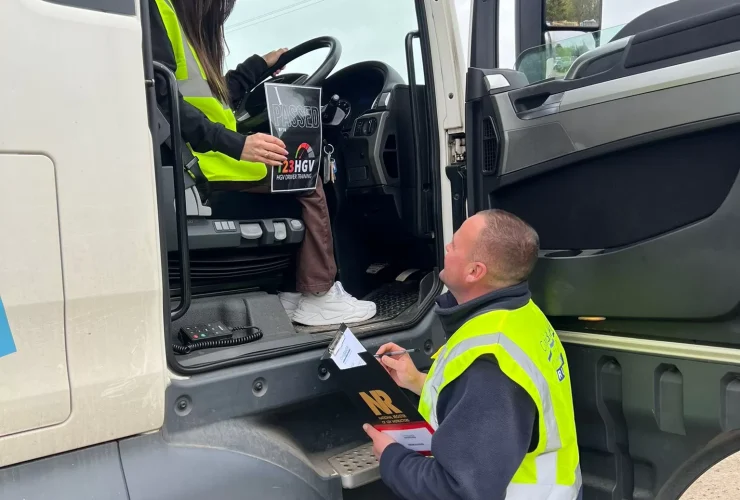
You might take a short driving assessment
Some companies (not all) will ask you to complete a short driving assessment, especially for Class 1 (Cat C+E) roles. This usually involves:
• A pre-use check of the vehicle
• A short drive around the yard or local area
• Reversing into a bay or navigating tight spots
They’re not expecting perfection—but they want to know you can handle the vehicle competently and safely. If you’ve trained properly, you’ve got this!
They’ll talk about the role and what to expect
The interviewer will explain more about the job itself—routes, schedules, vehicles, overtime, uniform, holidays, the lot. Be ready to ask your own questions, too. Here are a few good ones:
• What are the typical shift patterns?
• Do you provide ongoing training or CPC refreshers?
• Is there room to move into other roles (like Class 1 if you’re applying for Class 2)?
• What’s the average mileage per day?
It shows you’re keen, and that you’re thinking about the long term.
They’ll check your documents
Make sure to bring:
• Your driving licence (with all relevant entitlements)
• CPC card
• Digital tachograph card
• Any certificates (e.g. ADR, HIAB, First Aid)
• Proof of right to work (passport, etc.)
They’ll also likely ask for references or conduct a background check, especially if the role involves high-value goods or sensitive contracts.
Top tips to prepare:
• Dress smart casual – a clean polo and jeans is fine for most roles
• Arrive 10 minutes early
• Bring all documents neatly organised
• Speak clearly and confidently
• Be honest if you’re newly qualified—everyone starts somewhere
Remember: the demand is there
With driver shortages across the UK, many firms are crying out for reliable HGV and PCV drivers. If you’ve trained with 123HGV, you’ll already have a head start—and a guaranteed job interview to boot. Walk in with confidence, be yourself, and you could be walking out with a job offer.
Good luck—you’re almost there!