
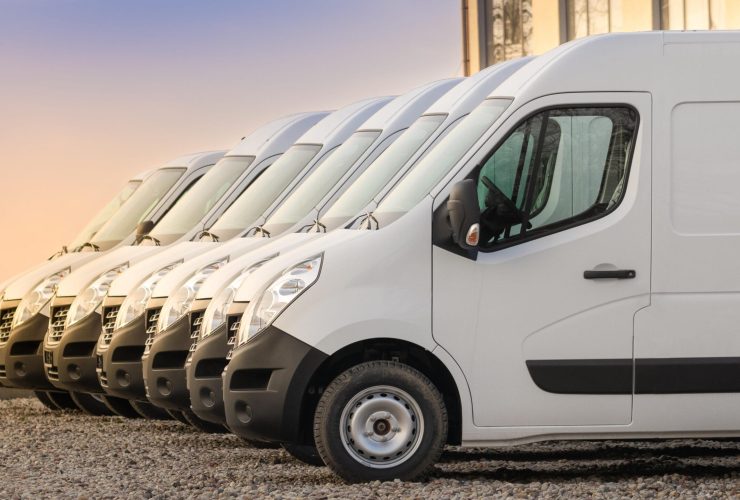
Obtaining a Category D1 licence is essential if you plan to drive a minibus with up to 16 passenger seats. Whether you work for a school, charity, sports club, or a transport provider, a D1 licence legally qualifies you to drive minibuses and small buses. But how much does it cost to get your D1 licence, and what steps are involved? In this comprehensive guide, we’ll explain what the D1 licence is, who needs it, the process to obtain it, and a detailed breakdown of all the costs – updated for 2025.
What is a D1 Licence (Minibus Licence)?
A Category D1 licence permits you to drive minibuses with up to 16 passenger seats (plus the driver) and up to 8 metres in length . In practice, this covers vehicles like community minibuses, school buses, and shuttle vans. It’s a sub-category of the Passenger Carrying Vehicle (PCV) licences. By contrast, a full Category D licence would allow larger buses/coaches with more than 16 passengers. Most people who passed their car test after 1997 are not automatically entitled to drive a 16-seater minibus – they must obtain the D1 licence through additional tests and training. (Some long-standing licence holders from pre-1997 have D1 (101) entitlement for non-commercial minibus driving, but anyone driving for hire or reward or in a professional capacity will require the full D1 PCV licence.)
Who needs a D1 licence? If you intend to drive a minibus professionally or commercially, or transport passengers (beyond the very limited volunteer conditions), you need the D1. Common examples include minibus drivers for schools and colleges, council transport services, sports teams, care home shuttles, tour and airport shuttle drivers, etc. Even if you only plan to drive a minibus for a charity or community group, having the D1 can be beneficial (and may be legally required if any payment is involved). Essentially, any vehicle with 9–16 passenger seats will fall under Category D1 or D, so getting the D1 licence is the safe route to ensure you’re qualified and insured to drive these vehicles legally.
How Do You Get a D1 Licence?
Getting your D1 licence involves several stages. Here is an overview of the step-by-step process:
- Obtain Provisional D1 Entitlement: First, you must apply for provisional D1 entitlement on your driving licence. This requires completing the DVLA D2 application form and having a D4 medical exam. A doctor will check that you meet the required health standards (vision, blood pressure, etc.). You send the forms to DVLA, and if all is well, they will add provisional Category D1 to your licence (usually with no additional fee, aside from the cost of the medical itself). You need to be at least 18 years old and already hold a full Category B (car) licence.
- Pass the PCV Theory Tests: Next, you’ll need to study for and pass the theory exams for the PCV category. There are two main theory tests: a multiple-choice theory test and a hazard perception test. The multiple-choice part includes bus/minibus-specific questions (e.g. passenger safety, vehicle dimensions) and the hazard perception involves spotting developing hazards in video clips. The costs for these are set by DVSA (£26 for the multiple-choice and £11 for hazard perception) . If you intend to drive the minibus professionally for hire or reward, you will also need to pass the Driver CPC Part 2 (Case Studies) theory test, which costs £23 . (We’ll discuss CPC more later.) Study materials and revision courses are available – many training providers (including 123HGV) offer theory preparation as part of a package.
- Undergo Practical Minibus Training: Once you have your provisional D1 and have passed the theory tests, the next step is practical training. It’s highly recommended to take professional minibus (PCV D1) driver training before attempting the practical test. Training courses range from intensive 2-day courses for those with prior experience, up to 4–5 day courses for beginners. You’ll learn vehicle safety checks, handling a larger vehicle, mirror usage, maneuvering (like the reversing exercise), and safe passenger transport techniques. The training ensures you get comfortable driving a minibus, since it’s bigger and heavier than a car. 123HGV, for example, offers courses of different lengths in their D1 training packages – a focused 2-day course for experienced drivers and a comprehensive 3-day course for new or nervous drivers . Choosing the right course length will depend on your confidence and prior experience.
- Pass the Practical Driving Tests: The D1 practical test actually comes in two parts – commonly referred to as Module 3a and 3b for PCV tests. Module 3a is an off-road manoeuvres test (reversing exercise) and Module 3b is the on-road driving test. In the off-road test, you’ll be asked to reverse the minibus into a coned bay safely (and possibly show the emergency exit operation). In the on-road test, the examiner will assess your driving on public roads, including observations, lane use, passenger comfort, and traffic situations, similar to a car test but in a larger vehicle. The DVSA practical test fees are currently £115 for the on-road module (weekday rate) and £40 for the off-road module . (If you take the on-road test in the evening or on a weekend, it costs £141 .) Your training provider usually helps arrange these test appointments. Once you pass both parts, you’ll have the Category D1 added to your licence.
- Driver CPC (if required): Driver CPC (Certificate of Professional Competence) is an additional qualification required for professional bus/coach drivers. If you will be driving the minibus as part of a job for hire/reward (e.g. paid minibus driver), you must also complete the Initial CPC. This involves passing the CPC Part 2 theory (as noted) and a Module 4 practical demonstration test. The Module 4 test is a 20-30 minute practical exam where you demonstrate things like safe loading, emergency precautions, wheelchair access, etc., to an examiner (no driving, just show-and-tell). The CPC practical test costs £55 (weekday rate) . Many D1 training courses offer CPC Module 4 training as an add-on. If you’re only driving a minibus privately or for certain non-profit sectors, CPC might not be required – but most new D1 drivers getting certified for work will do CPC to keep all options open. (One exception: if you’re driving under a strict volunteer condition with no payment, or under a school/charity permit, CPC might be exempt. But for nearly all professional scenarios, you need it .)
Now that we’ve covered the process, let’s get to the big question: How much does all this cost?
D1 Licence Cost Breakdown
The total D1 licence cost can be broken down into several components. Some are fixed fees (like DVLA test costs), while others (like training course prices) can vary. Here’s a breakdown of typical costs involved in obtaining a D1 licence in the UK:
- Medical Examination (D4) – £50–£130: You’ll need a medical check by a doctor to complete the D4 form. Prices vary depending on the provider; your GP might charge around £100, whereas private providers or clinics can be as low as £50. (In some areas it could be up to £150 at the high end .) This is usually the first cost you’ll encounter. Tip: 123HGV offers a starter package that includes the medical exam along with theory support for about £199 total , which can simplify things if you prefer an all-in-one service.
- Provisional Licence Application – (No fee to DVLA): Applying to add the provisional D1 entitlement via the D2 form doesn’t carry a direct fee from DVLA (unlike your first learner licence). So, other than postage and the cost of the medical, getting the provisional licence is more about paperwork than payment. If you don’t already have a photocard licence or it’s expired, there could be a £ £32–£34 fee to issue a new licence , but most candidates won’t need to pay for adding D1 provisional. Essentially, the medical is the main upfront expense to get your provisional D1.
- Theory Test Fees – £37–£60: The standard DVSA fees for the PCV theory tests are £26 for the multiple-choice exam and £11 for the hazard perception test – totaling £37 for the pair. If you also require the CPC case studies test (Module 2) it’s an additional £23 . So someone who needs the full set of theory tests will pay about £60 in total exam fees (note: there’s no VAT on official test fees) . You might also invest in study materials or apps (~£20–£50, optional) , unless your training package includes theory training resources. Good news: 123HGV’s starter bundle covers theory study support and test booking in that £199 package, which effectively bundles this cost for you.
- Practical Training Course – £800–£1,500 (approx): This is usually the largest cost component, but it can vary widely. The price depends on how many days of training you need, your location, and the provider. Training providers often offer packages of different durations. For example, 123HGV offers a 2-day D1 course from £795, a 3-day course around £1,115, all including VAT . These fees typically include the use of the training vehicle, instructor time, and often the practical test fee scheduling (always check if the DVSA test fee is included or if you pay that separately). In general, expect roughly £800–£1,100 for a short course (2–3 days) if you’re fairly confident, and up to £1,500+ if you opt for a longer course or an all-inclusive package with extras . Shopping around is wise – but ensure you’re comparing what’s included (some cheaper quotes might not include VAT or test fees). It’s noted by industry experts that total D1 training costs (including tests) often range between £1,000 and £1,800 depending on region and whether CPC is included . Training around London tends to be at the higher end, while northern areas may be a bit less expensive .
- DVSA Practical Test Fees – ~£115–£155: If not included in your training package, you’ll pay the DVSA for the practical tests. The on-road driving test fee is £115 (weekday) or £141 (weekend) . The off-road reversing test is £40 (some private test sites might charge up to £40 as well). So, roughly £155 covers both modules if taken on weekdays. Many training companies will handle the booking and include these fees in their quote, but it’s good to know the breakdown. These fees are standard nationwide.
- Driver CPC Qualification (Modules 2 & 4) – ~£80–£300: If you require the full Driver CPC, there are two additional costs: the Module 2 case study test (£23, as mentioned) and the Module 4 practical demonstration test (£55 weekdays) . That’s about £78 in exam fees. On top of that, you may pay for Module 4 training – some providers include a short training session to prepare you for the questions and vehicle checks in the CPC demo. For example, 123HGV offers a CPC Module 4 training + test package for £250 (including the test fee). If you’re doing CPC, it may also be bundled in a full course price. Paratransit note: If you’re only using D1 for non-commercial purposes (e.g. school teacher driving a school minibus under a permit), you might not need the CPC at all, saving this cost. But most new drivers getting a D1 for job purposes will complete CPC to keep their employment options open .
Total Cost Range: Adding everything up, a new driver going through the entire D1 process should budget roughly £1,200 on the low end to £1,800 on the higher end for everything. In many cases, people end up around the £1,500 mark all-in . Your exact total will depend on how much training you need and if you’re doing CPC. For instance, someone who already has a medical and only takes a short course might spend under £1,000, whereas someone opting for a premium package with extra training and CPC could approach £1,800. It’s also wise to budget a little extra as a safety net for any re-tests – if you don’t pass one of the exams first time, you’ll have to pay the test fee again for the retake (and possibly an hour or two of instructor time for additional practice) . Hopefully you won’t need it – but being prepared financially means no surprises.
Can You Reduce or Spread the Cost?
Training for a D1 licence is a significant investment, but there are ways to manage it:
- Employer or Sponsorship: In some cases, your employer or an organization may cover the cost. For example, a school or charity that needs you to drive their minibus might pay for your training, or local councils sometimes fund minibus driver training for volunteers. It’s worth inquiring if any such funding or grants exist in your situation. (One training academy noted that some NHS Trusts will fund the entire C1 ambulance licence for paramedic trainees – similarly, some educational or community employers might sponsor D1 training.)
- Compare Providers (But Beware of Brokers): Prices vary among training providers. It’s smart to get quotes from a couple of reputable local schools. However, ensure you’re dealing with actual training schools, not third-party brokers. Be cautious of brokers who might quote a very high price and subcontract the training – you could end up paying more than going direct . Look for reviews or recommendations, not just price, since quality of training matters (better training might mean passing quicker, saving retest costs).
- Installment Plans: Many driving academies now offer finance options. For instance, 123HGV allows you to spread the cost into three interest-free instalments with Payl8r Pay-in-3 . That means you can book your course with a deposit and pay the remainder over two more monthly payments – helpful if you don’t want to pay all upfront. Spreading, of course, doesn’t reduce the total, but it makes it more manageable. Some providers also partner with finance companies for longer-term payment plans (though check if there’s interest on those).
- Intensive Courses to Save Time: Time is money, and many providers offer short-notice intensive courses so you can get your licence faster (reducing time off work). 123HGV, for example, often arranges back-to-back training and test dates so you’re not waiting around . A fast-track process can sometimes save on extra commuting or accommodation costs if you’re traveling for training.
- Retest Insurance or Extra Practice: Some packages might include a free retest or extra training hours in case you don’t pass first time. While not common, it’s something to look out for when choosing a package. Even if not offered, consider investing in an additional hour or two of training beyond the basic course if you feel uncertain – it might improve your chances of passing and avoid the cost of a full test re-book.
In short, while the D1 licence can cost a fair amount, think of it as an investment in your qualifications. With the licence, you become eligible for a range of job opportunities (many of which are in high demand and can be quite rewarding).
Start Your D1 Training Journey
With proper preparation and the right training support, you can achieve your D1 licence on the first attempt and open up new driving opportunities. 123HGV prides itself on a 97% first-time pass rate for trainees and even guarantees a job interview upon passing, helping you move straight from test pass to paid work in passenger transport . We offer PCV D1 Minibus Driver Training across the UK, including local courses in Leicester, Sheffield, Leeds, Wigan, Liverpool, Manchester, Birmingham, and London. Our experienced instructors will guide you through every step – from your medical and theory prep to practical driving skills and CPC certification – ensuring you get both the licence and the confidence to drive a minibus safely.
Ready to get started? Contact us today to discuss your D1 training options, and take the first step toward becoming a qualified minibus driver. The road to your D1 licence may seem long, but with the right support, you’ll be in the driver’s seat of a minibus before you know it – and on your way to a new career or volunteering adventure!