
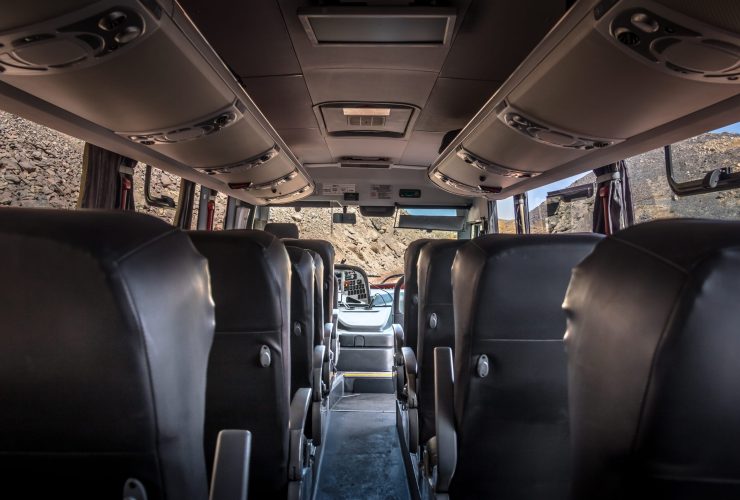
If you have checked the back of your driving licence and noticed “D1 (101)” listed under your entitlement categories, you may be wondering exactly what it means and what you are legally allowed to drive.
The D1 101 category causes confusion for many drivers in the UK, especially those who passed their car driving test before 1997. In this guide, we explain what D1 101 means, what restrictions apply, whether you can drive a minibus legally, and when you may need a full D1 licence.
If you are looking to obtain full minibus entitlement, you can also view our PCV Category D1 Minibus Driver Training courses or get started online here.
What Does D1 101 Mean on a Driving Licence?
D1 is the licence category that allows drivers to operate minibuses with:
- Up to 16 passenger seats
- A maximum vehicle length of 8 metres
- A trailer up to 750kg maximum authorised mass (MAM)
The important part is the restriction code 101.
Code 101 means:
“Not for hire or reward.”
This restriction prevents drivers from using their D1 entitlement for commercial passenger transport or paid driving work.
Who Has D1 101 Entitlement?
Many drivers who passed their UK car driving test before 1 January 1997 automatically received D1 entitlement through what are commonly called “grandfather rights”.
However, this entitlement often appears as:
- D1 (101)
This means the driver may legally drive qualifying minibuses, but only under certain conditions.
What Does “Not for Hire or Reward” Mean?
“Not for hire or reward” means you cannot receive payment specifically for transporting passengers.
In simple terms, D1 101 entitlement is usually intended for:
- Private use
- Volunteer driving
- Non-commercial transport
- Certain community or charity activities
It generally does not allow drivers to:
- Operate commercial minibus services
- Carry paying passengers professionally
- Work as a paid minibus driver
- Drive for hire or reward purposes
The rules can become complex depending on the organisation, payment structure, and vehicle use, so professional advice should always be sought if unsure.
Can You Drive a Minibus With D1 101?
Yes — in many cases you can legally drive a minibus with D1 101 entitlement.
However, restrictions still apply.
The vehicle and usage must normally remain within the legal limits attached to your entitlement.
Factors that can affect legality include:
- Whether passengers are paying
- Whether you are being paid to drive
- The vehicle weight
- The number of passengers carried
- Trailer use
- The purpose of the journey
This is why many organisations now require drivers to obtain a full D1 licence even if they already hold D1 101 entitlement.
What Is the Difference Between D1 101 and a Full D1 Licence?
| Licence Type | What It Allows |
|---|---|
| D1 (101) | Minibus driving not for hire or reward |
| Full D1 Licence | Professional and commercial minibus driving |
A full D1 licence removes the “101” restriction and allows drivers to carry passengers professionally, subject to operator and CPC requirements where applicable.
How Do You Remove the 101 Restriction?
To remove the 101 restriction from your licence, you will usually need to obtain a full D1 qualification.
This normally involves:
- Applying for provisional D1 entitlement
- Completing a D4 medical examination
- Passing the PCV theory tests
- Completing professional D1 driver training
- Passing the practical driving test
Once passed, you can gain full D1 entitlement without the 101 restriction code.
You can learn more about the process on our D1 Minibus Driver Training page.
Do Younger Drivers Have D1 101?
Most drivers who passed their car driving test after 1 January 1997 do not automatically receive D1 entitlement.
Instead, they usually need to complete the full D1 training and testing process separately.
This is why D1 101 entitlement is most commonly found on older UK licences.
Do You Need Driver CPC With a D1 Licence?
In some professional driving situations, Driver CPC requirements may also apply alongside your D1 entitlement.
This depends on:
- The type of work
- Commercial operation
- Passenger transport activities
- Vehicle usage
Many professional minibus drivers will require both full D1 entitlement and Driver CPC qualification.
What Vehicles Can You Drive With D1 101?
D1 101 entitlement may allow you to drive:
- School minibuses
- Community transport minibuses
- Private minibuses
- Certain charity transport vehicles
However, legal restrictions still apply regarding payment, vehicle use and passenger transport.
Why Many Drivers Upgrade to a Full D1 Licence
Even drivers who already hold D1 101 entitlement often choose to obtain a full D1 qualification.
This can provide:
- Greater employment opportunities
- Professional driving eligibility
- Commercial driving entitlement
- Improved insurance acceptance
- More flexibility when driving minibuses
Professional training also helps drivers become safer and more confident operating passenger vehicles.
Professional D1 Training With 123HGV
At 123HGV, we provide professional PCV Category D1 Minibus Driver Training across England.
We help drivers through the entire process, including:
- Medical guidance
- Theory test support
- Practical driver training
- DVSA test preparation
- Professional minibus driver training
Whether you are upgrading from D1 101 entitlement or starting from scratch, our team can help guide you through the process.
Get Started With D1 Training Today
If you want to gain full D1 entitlement and remove the 101 restriction, we are here to help.
You can get started online here and speak with our team about the best route into professional minibus driving.
Frequently Asked Questions
What does D1 101 mean?
D1 101 means you can drive a minibus, but not for hire or reward purposes.
Can I drive a minibus with D1 101?
Yes, in many cases you can legally drive a qualifying minibus, but commercial restrictions apply.
What does “not for hire or reward” mean?
It means you cannot carry passengers commercially or receive payment specifically for passenger transport services.
How do I remove the 101 restriction?
You normally need to complete the full D1 training and testing process to gain unrestricted D1 entitlement.
Who gets D1 101 entitlement?
Many drivers who passed their UK car driving test before 1 January 1997 automatically received D1 101 entitlement.